The Showdown: Battle of the Oura Generations
If you’re deciding between the Oura Ring Gen 3 and Gen 4 in 2025, battery life is likely a major concern. Both rings promise cutting-edge sleep tracking, but how do they actually perform when it comes to staying charged? After analyzing real user feedback and testing data from 2025, we’re breaking down the battery performance, accuracy improvements, and overall value of these two generations.
The Gen 3 launched as a revolutionary sleep tracker, while the Gen 4 promises enhanced sensors and longer battery life. But do the upgrades justify the price difference? Let’s dive into what actually matters for your sleep tracking experience.
Quick Comparison Table
| Feature | Oura Ring Gen 3 | Oura Ring Gen 4 |
|---|---|---|
| Battery Life (2025 Reality) | 3-3.5 days (degrades to 1-2 days after 1-2 years) | 4-5 days initially, ~3 days after several months |
| Sensor Accuracy | Good for temperature, HRV, and heart rate | Enhanced sensors with improved temperature and HRV accuracy |
| Price (2025) | $299 + $5.99/month subscription | $349 + $5.99/month subscription |
| Charging Time | 80 minutes for full charge | 60-70 minutes for full charge |
| Best For | Budget-conscious buyers who don’t mind slightly lower battery life | Those prioritizing the latest sensors and marginally better battery performance |
Battery Life: The Reality Check
The most critical difference between these two rings is battery performance—and the real-world data tells an interesting story.
Oura Ring Gen 3 Battery Performance
When the Gen 3 launched, Oura promised up to 7 days of battery life. In 2025, user reports paint a different picture. Most Gen 3 owners report 3-3.5 days of battery life when their ring is relatively new. However, multiple Reddit users who’ve owned their Gen 3 for 1.5-2.5 years report significant battery degradation, with some needing to charge 3 times per day by late 2024/early 2025.
One frustrated user noted: “I’ve had the Oura V4 ring having a battery life lasting little more than a day (I bought it last year).” Another Gen 3 owner shared: “I’ve had the Oura 3 for 2.5 years and now having to charge 3 times a day.”
Ring size also impacts battery life. Smaller rings (sizes 6-9) have less physical space for battery cells, resulting in shorter charge cycles compared to larger sizes (10-13).
Oura Ring Gen 4 Battery Performance
The Gen 4 launched with promises of improved battery technology. Early 2025 reviews suggest it delivers 4-5 days of battery life when new, representing a modest improvement over Gen 3. Users report “subtle improvement on already great battery life” and more accurate sensors that may consume slightly more power.
However, it’s important to note that the Gen 4 is relatively new (launched late 2024), so long-term battery degradation data isn’t available yet. Based on Gen 3’s trajectory, expect similar degradation patterns after 18-24 months of use.
Bottom Line on Battery: Gen 4 offers about 1-1.5 days more battery life when new, but both rings will likely degrade significantly after 2 years. If battery longevity is your primary concern, consider alternatives like the Ultrahuman Ring Air, which some users report has more consistent long-term battery performance.
Design & Comfort: Nearly Identical
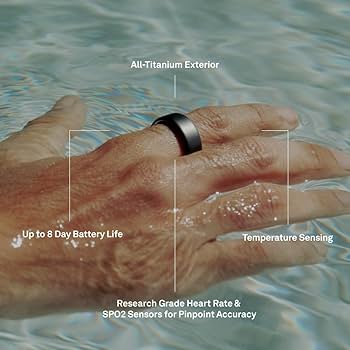
Both generations maintain Oura’s signature sleek titanium design. The Gen 4 looks virtually identical to Gen 3, with the same width, thickness, and weight profile. Both come in silver, black, stealth, and gold finishes.
The charging experience is identical: both use a proprietary charging dock that the ring sits in. Gen 4 charges slightly faster (60-70 minutes vs 80 minutes for Gen 3), but both require you to remove the ring while charging—meaning you’ll miss sleep data if you charge overnight.
Pro tip: Most users charge their ring during their morning routine (shower, coffee, breakfast) to avoid missing nighttime data. With 60-80 minute charge times, this works well for maintaining continuous tracking.
Accuracy: Where Gen 4 Actually Shines
The Gen 4’s sensor improvements are more than marketing speak. According to 2025 reviews, the Gen 4 delivers:
- More accurate temperature sensing: Enhanced sensors provide more precise baseline body temperature readings, which improves illness detection and cycle tracking
- Better heart rate tracking: Improved optical sensors reduce gaps in heart rate data during sleep
- Enhanced HRV measurements: Heart Rate Variability readings are more consistent night-to-night, providing better stress and recovery insights
One Gen 4 reviewer noted: “Subtle improvement on already great battery life and more accurate temperature, heart rate, and HRV sensing than gen 3.”
However, the Gen 3 is still highly accurate for sleep tracking purposes. Unless you’re using your ring for medical-grade tracking or competitive athletic recovery, the Gen 3’s sensors are more than sufficient for understanding your sleep patterns.
For context on how Oura compares to other sleep trackers, check out our comparison of the Amazfit Balance vs Samsung Galaxy Watch Active 2.
Software & Features: Identical Experience
Both Gen 3 and Gen 4 use the same Oura app and require the $5.99/month subscription (first month free). You get access to:
- Sleep score and detailed sleep stage analysis
- Readiness score based on HRV, resting heart rate, and body temperature
- Activity tracking and movement goals
- Period prediction and fertility tracking (Gen 4 slightly more accurate)
- Guided meditation and breathing exercises
- Integration with Apple Health, Google Fit, and other apps
The subscription model is controversial—you’re paying $72/year on top of the $299-349 hardware cost. However, competitors like Whoop also use subscription models, and the Oura app genuinely provides valuable insights that justify the cost for serious sleep optimizers.
Price & Value Analysis
Here’s the math:
- Gen 3: $299 + $72/year subscription = $371 first year, $443 over 2 years
- Gen 4: $349 + $72/year subscription = $421 first year, $493 over 2 years
The Gen 4 costs $50 more upfront. For that premium, you get:
- 1-1.5 days longer battery life (when new)
- More accurate sensors
- Faster charging time
- Latest technology that will be supported longer
Is it worth $50? That depends on your priorities. If you’re buying in 2025 and plan to keep the ring for 3+ years, the Gen 4’s improved sensors and presumably longer software support make it the better investment. If you’re budget-conscious or unsure if you’ll stick with ring tracking, the Gen 3 offers 90% of the experience at a lower price.
The Verdict: Who Wins?
Choose Oura Ring Gen 4 if:
- You want the latest sensor technology and most accurate tracking
- An extra 1-1.5 days of battery life matters to you
- You plan to keep the ring for 3+ years and want future-proof tech
- You’re using the ring for medical-grade tracking (cycle monitoring, illness detection)
- The $50 price difference doesn’t affect your decision
Choose Oura Ring Gen 3 if:
- You want to save $50 and get essentially the same experience
- You’re new to sleep tracking and want to test the waters
- You can find a good deal on a used/refurbished Gen 3
- You don’t need the absolute latest sensors (Gen 3 is still highly accurate)
Consider Alternatives if:
- Battery life is your top priority: The Ultrahuman Ring Air reportedly has better long-term battery performance and no subscription fee
- You want more than sleep tracking: The Samsung Galaxy Ring (compare with our Amazfit Balance review) offers fitness features Oura lacks
- You prefer a wrist device: Check out our best sleep gadgets roundup for watches and other trackers
Real User Experiences from 2025
Based on Reddit communities and reviews from July-November 2025, here’s what actual users are saying:
Battery concerns dominate discussions: The most common complaint across both generations is battery degradation. Users who bought Gen 3 in 2022-2023 are experiencing significant drops by 2025, leading many to consider upgrading or switching brands.
Subscription fatigue is real: Multiple users express frustration with the ongoing $5.99/month cost, especially when battery issues force them to upgrade hardware every 2-3 years.
Sleep insights are valuable: Despite complaints, users consistently praise Oura’s sleep analysis. The readiness score, in particular, helps people make better decisions about training, work intensity, and recovery.
Ring size matters: Smaller ring sizes (especially sizes 6-8) report shorter battery life than larger sizes. Order the sizing kit and go with the largest comfortable size for best battery performance.
Final Recommendation
In 2025, the Oura Ring Gen 4 is the better buy for most people willing to invest in premium sleep tracking. The improved sensors, slightly better battery life, and future-proof technology justify the $50 premium if you’re committing to the Oura ecosystem.
However, the Gen 3 remains a viable option for budget-conscious buyers or those wanting to test ring-based tracking. Just be aware that battery degradation will likely require replacement within 2-3 years regardless of which generation you choose.
For the best sleep optimization results, pair your Oura Ring with other sleep-enhancing tools like a Hatch Restore 3 or Loftie Clock for a comprehensive sleep improvement system.