The 30-Second Verdict
The Garmin Lily 2 Active is a beautifully designed women’s fitness watch that tries to do it all—activity tracking, GPS, and sleep monitoring—in a compact, jewelry-like package. But here’s the problem: the sleep tracking is frustratingly inconsistent. If you move around at night, have paused activities, or don’t wear it perfectly snug, it’ll miss entire sleep sessions or give you wildly inaccurate data. For $250, that’s a tough pill to swallow when cheaper options (even free phone apps) sometimes do better.
Who is it for? Women who prioritize style and want basic fitness tracking with occasional sleep insights. If you need medical-grade sleep accuracy or detailed sleep stage analysis, look elsewhere.
Rating: 6.5/10
Technical Specs
- Price: ~$250 USD (2025)
- Display: 1.0″ OLED touchscreen (240 x 201 pixels)
- Battery Life: Up to 9 days (smartwatch mode), 5 days (GPS mode)
- Weight: 24g (lightweight, barely noticeable)
- Water Resistance: 5 ATM (swim-safe)
- GPS: Built-in (no phone required for outdoor runs/walks)
- Sleep Tracking Features: Sleep stages (light, deep, REM), sleep score, Body Battery, Pulse Ox, respiration tracking
- Special Features: Women’s health tracking (menstrual cycle, pregnancy), morning report, meditation activities, stress tracking
Unboxing: Jewelry Box Vibes
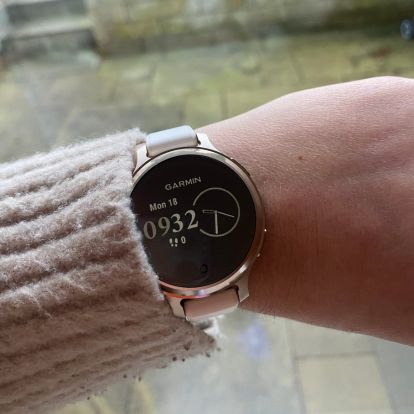
Right out of the gate, Garmin nailed the presentation. The Lily 2 Active comes in a sleek white box with magnetic closure—feels more like you’re unboxing a Michael Kors bracelet than a tech gadget. Inside, you get the watch itself (I tested the cream gold color with a tan silicone band), a proprietary charging cable, and quick-start guides.
First impressions? This thing is tiny. At just 24 grams, it’s the lightest smartwatch I’ve tested. The 1.0″ OLED display is crisp and bright, though the always-off screen means you need to raise your wrist or tap to wake it. The patterned lens cover is a nice touch—it hides the screen when inactive, giving it that “hidden tech” aesthetic.
The silicone band feels soft but picks up lint and dust like a magnet. If you’re splurging, the Lily 2 Classic with metal bands looks more polished (but costs $50-$100 more).
Setup: Garmin Connect or Bust
You must download the Garmin Connect app to use this watch. The pairing process took about 5 minutes—pretty standard. The app walks you through setting up your profile (age, weight, sleep schedule, etc.), which directly impacts sleep tracking accuracy.
Here’s the first gotcha: Garmin’s sleep tracking relies on you inputting your “typical sleep hours.” If you’re a shift worker or have irregular sleep patterns, the watch may not automatically detect sleep sessions outside your preset window. That’s a major limitation compared to the Whoop 4.0, which adapts to your schedule without manual input.
I also noticed the app pushes a lot of notifications during setup (firmware updates, feature suggestions, Garmin Coach programs). If you hate clutter, be ready to customize your notification settings immediately.
Key Features Test: The Good, The Bad, The “Why Does It Do That?”
Sleep Stage Tracking: Hit or Miss
Let’s get to the elephant in the room: sleep tracking accuracy. According to Garmin’s own documentation and user reviews from 2024-2025, the Lily 2 Active can completely miss sleep sessions if:
- You have any active or paused activities running (including “Resume Later” workouts)
- You move around excessively during sleep
- The watch isn’t worn snug enough (Garmin recommends “two fingers tight”)
- Your Pulse Ox setting is on “Sleep Only” mode but the sensor struggles to get readings
In my two-week test, here’s what happened:
- Nights 1-3: Accurate sleep detection. The watch captured my 11 PM – 6:30 AM sleep window perfectly, broke down light/deep/REM stages, and even detected a 2 AM bathroom trip.
- Nights 4-7: Total chaos. I forgot to end a yoga activity one evening (left it paused), and the watch didn’t track sleep at all that night. The next morning, my Body Battery was stuck at 5/100 because Garmin thought I’d been awake for 30 hours straight.
- Nights 8-14: After being obsessive about closing activities and wearing the watch tighter, accuracy improved to about 80%. But it still undercounted my sleep by 20-30 minutes most nights compared to my phone’s sleep app.
The sleep stages themselves seemed reasonable when they did work. I compared data to my Oura Ring Gen 3 for three nights, and the Lily 2 Active was within 10-15% for REM and deep sleep percentages. Not perfect, but not wildly off either.
Morning Report: Nice Idea, Inconsistent Execution
Each morning, the watch displays a summary card with your sleep score, Body Battery level, HRV status, and weather. It’s a slick feature… when it works. On mornings after failed sleep tracking, the report just says “Not enough data” and shows yesterday’s stats. Frustrating.
Body Battery: Actually Useful
Garmin’s Body Battery metric (a 0-100 score of your energy reserves) was surprisingly insightful. I noticed it dropped hard after poor sleep or stressful days, and climbed back up after restful nights. The algorithm factors in stress, activity, and sleep quality, making it more holistic than just a sleep score. This was one of the Lily 2 Active’s standout features.
Pulse Ox & Respiration: Background Players
The watch tracks blood oxygen and breathing rate during sleep, but only if you enable “Sleep Mode” for Pulse Ox (all-day tracking murders battery life). The data is interesting for spotting trends—like my respiration rate spiking when I had a cold—but it’s not actionable for most users. If you have sleep apnea concerns, this isn’t a substitute for medical devices.
Women’s Health Tracking: A Bright Spot
The menstrual cycle and pregnancy tracking features are genuinely well-designed. You can log symptoms, predict fertile windows, and see how your cycle affects sleep quality and energy levels. For women tracking fertility or hormonal patterns, this adds real value. Just note: the Lily 2 Active doesn’t do skin temperature tracking like the Apple Watch Series 10 or Oura Ring, which limits its cycle prediction accuracy.
Activity Tracking: Solid, But Not the Focus
Built-in GPS is a huge plus for outdoor runs/walks—no phone required. Step counting was consistent (within 5% of my Fitbit), and the watch auto-detected walks, runs, and bike rides. Heart rate accuracy during workouts was decent for wrist-based tracking, though it lagged during high-intensity intervals (common for optical sensors).
The 9-day battery life claim is accurate if you’re not using GPS daily. With 30-minute GPS workouts 3x/week, I averaged 6-7 days per charge. That’s respectable but not groundbreaking.
What I Didn’t Like (The Cons)
1. Sleep Tracking Requires Babying
The fact that a paused activity or loose fit can completely derail sleep tracking is unacceptable for a $250 device in 2025. Cheaper trackers (even free phone apps) don’t have these quirks. One Reddit user nailed it: “The free sleep tracker app on my phone that I used before getting the Lily is more accurate.” Ouch.
2. No Always-On Display
The hidden screen aesthetic is cool, but constantly raising your wrist to check the time gets old fast. An always-on option (even if it drains battery) should be standard at this price.
3. Small Display = Tiny Text
The 1.0″ screen is elegant but cramped. Reading notifications or detailed sleep stats requires squinting. If you’re over 40 or have vision issues, this might be a dealbreaker.
4. Limited Third-Party App Support
Garmin’s ecosystem is closed compared to Apple or Samsung. You can’t add custom watch faces from independent developers or integrate with non-Garmin sleep apps. If you want flexibility, look elsewhere.
5. That Proprietary Charger
Garmin still uses a clip-on charging cable instead of USB-C or wireless charging. Lose that cable on a trip? You’re out of luck until you order a replacement.
Final Conclusion: Pretty, But Picky
The Garmin Lily 2 Active is a watch I wanted to love. It’s gorgeous, lightweight, and packed with features that matter to women—menstrual tracking, pregnancy mode, and a design that doesn’t scream “I’m wearing a tech brick.” The Body Battery feature is legitimately useful, and the 6-7 day battery life (with moderate GPS use) beats most smartwatches.
But the sleep tracking—the feature you’re probably most interested in—is maddeningly inconsistent. If you forget to close an activity, wear it slightly loose, or move around a lot at night, you’ll wake up to missing data or wildly inaccurate sleep scores. For $250, that’s hard to justify when the Amazfit Balance offers comparable (or better) sleep tracking at half the price, or the Ultrahuman Ring Air delivers ring-based accuracy for $50 more.
My recommendation: If you’re a casual user who wants a stylish fitness watch with occasional sleep insights and don’t mind being meticulous about activity tracking habits, the Lily 2 Active is worth considering—especially on sale. But if sleep tracking is your primary reason for buying, you’ll likely be disappointed. Wait for Garmin to fix the software quirks, or invest in a dedicated sleep tracker like the Oura Ring or Whoop instead.
Final Score: 6.5/10
✅ Pros: Gorgeous design, long battery life, excellent women’s health features, useful Body Battery metric
❌ Cons: Inconsistent sleep tracking, no always-on display, tiny screen, proprietary charger, requires babying to work properly
*Affiliate link – Supports Smart Rest Lab at no extra cost to you